
Sitting & Floor Independence
Arms, core, hips, balance. This masterclass breaks independent sitting into six pieces you can practice, so you can see which one your baby is missing and build it.

Every baby you know is sitting up. Yours folds sideways the second you let go.
Or they tip forward and face-plant into the play mat. Or they arch and throw themselves backward in a full trust fall the moment you set them down.
You've wedged them between pillows. You've propped them in the corner of the couch. They'll sit there, sort of, right up until you take your hand away.
And the advice is the same shrug: "they'll sit when they're ready."
But here's what nobody tells you… sitting isn't one skill.
It's arm strength, core strength, hip stability and the reflex to catch themselves, all arriving at once. When a baby topples, one of those pieces isn't there yet, and the way they fall is often a clue to which one.
The answer is purposeful play, not simply “more play”
This course won't hand you a timeline to compare your baby against. It breaks independent sitting into the 6 P's, the six components Dr. Emily works on in clinic, and shows you how to practice each one on your living room floor.
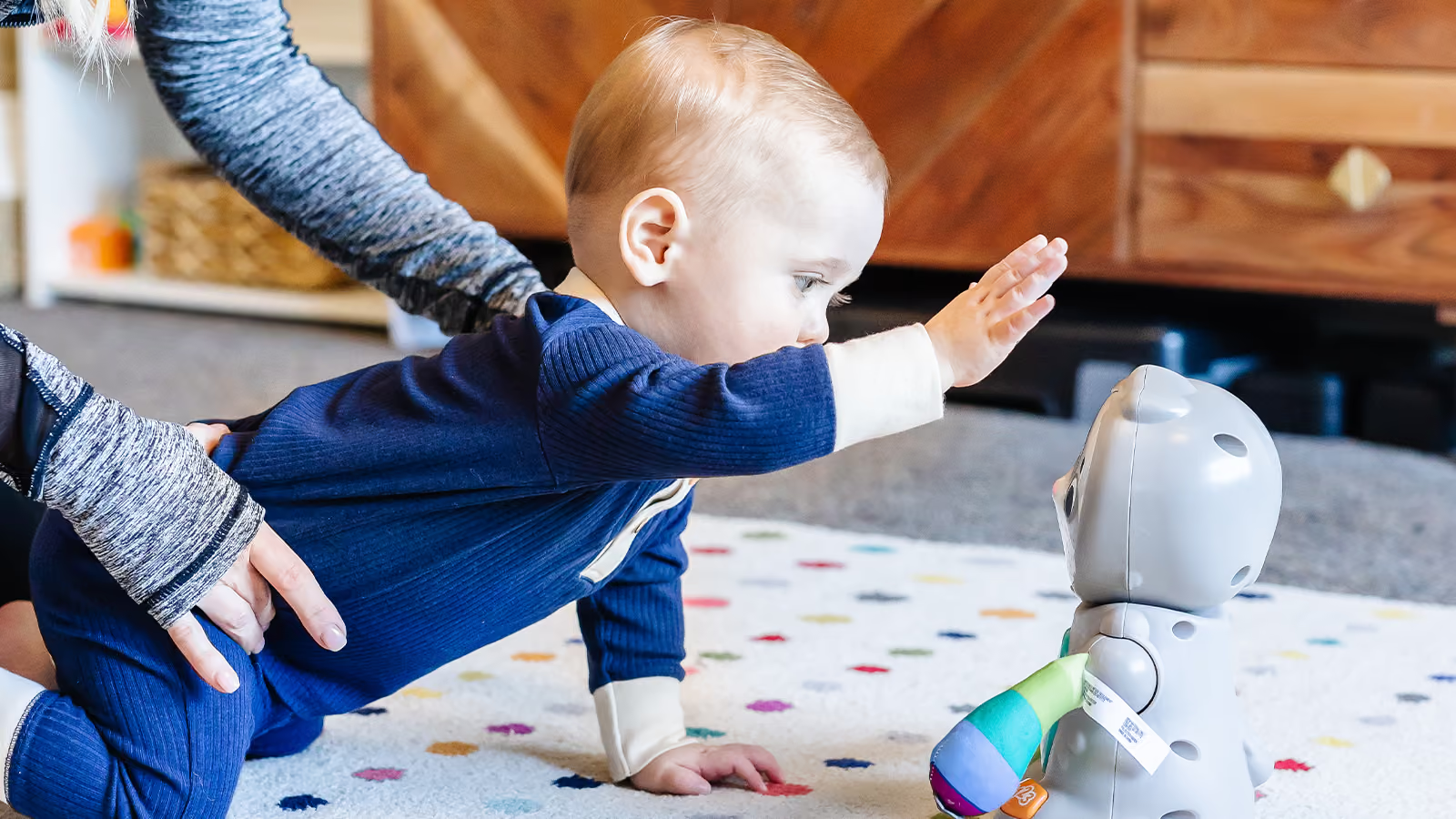
You'll learn protective reactions, so your baby catches themselves with a hand instead of tipping over.
You'll learn prop play and perch play, which build the arm support and tall, upright posture that come before hands-free sitting.
You'll learn plank play, which builds the shoulder and arm strength Dr. Emily calls the most important P of all.
You'll learn praise and play and playing with feet, which build the deep core strength behind a steady trunk.
Every P comes in beginner, intermediate and advanced versions, each with clear signs for when to move up. You won't be guessing whether an activity is too hard. You'll know where your baby is and what comes next.
That's the floor independence part. A baby who can sit, reach for a toy and catch themselves can finally play on their own.
Same twenty minutes of floor time, usually over four to eight weeks. At the end of it, your baby isn't being placed in a sit. They're holding one.
What's inside
Sitting & Floor Independence
- Introduction to Sitting2 lessons
Sitting Facts
Common Delays and Red Flags
- The 6 P's: Protective Reactions4 lessons
The 6 P's of Independent Sitting
Activity 1: Crossing Midline on Couch
Activity 2: Lateral Reach in Parent's Lap
Activity 3: Lateral Head Righting
- The 6 P's: Prop Play5 lessons
Activity 1: Prop Sitting on Parent's Feet
Bonus: Handling Tips for Flingers
Activity 2: Prop Sitting with Pillow for Early Sitters
Activity 2 Modification: On Forearms
Optional Activity 3: Sidesitting
- The 6 P's: Perch Play5 lessons
Introduction to Perch Play
Activity 1: On a Wedge or Incline
Activity 1, Modification
Activity 1, Modification
Activity 2: Tummy Circles
- The 6 P's: Plank Play2 lessons
Activity 1: Baby Planks
Activity 2: Hands-and-Knees Play at Incline
- The 6 P's: Praise & Play3 lessons
Activity 1: Reaching Over Head on Exercise Ball
Activity 2: Reaching Over Head on Pillow or Water Mat
Activity 2, with Modification
- The 6 P's: Playing with Feet3 lessons
Activity 1: Assisted Playing with Feet
Activity 2: Core Work on Exercise Ball
Activity 3: Core Work on Parent's Lap
What you'll walk away with
A reason for every topple. When your baby tips, you'll know whether it's arms, core, hips or balance, and which activity addresses it.
A plan for flingers. Handling and positioning tips for babies who arch and throw themselves backward, so sitting practice stops ending in a trust fall.
Safer tumbles. Protective reactions teach your baby to catch themselves with an outstretched arm when they lose their balance, instead of tipping straight over.
Red flags, clearly named. The common sitting delays and the signs worth raising with your pediatrician, so you know the difference between "not yet" and "worth a look."
Who it's for
Parents and caregivers of babies from around four months who are working toward sitting on their own. That covers babies who are just starting to prop and babies who have been "almost sitting" for weeks. It's built for typically developing babies whose parents want to be active participants rather than spectators, and it's the natural next step after Groundwork.
Who it isn't for: this isn't a substitute for care. If your child has a diagnosed delay or you have active concerns, this supports professional treatment; it doesn't replace it.